

2026 autumn foliage: Peak viewing areas shift to lower mountains and plains, with many locations expected to peak around or slightly later than average

Cold air moving in this weekend will accelerate the color change
The timing of autumn leaf color is closely tied to temperatures: cooler weather brings color earlier, while warmer weather delays it.
Cold air flowed in repeatedly from September through October this year, mainly on the Sea of Japan side, helping the leaves change color steadily. Many places across Japan reached their peak around the usual time. However, some parts of eastern Japan, including Mount Nasu in Tochigi Prefecture and Takamine Kogen in Nagano Prefecture, where foliage typically peaks by mid-October, reached their peak slightly later than average.
The weather is forecast to change in cycles. Cold air is expected to move in this weekend, from November 7 to around November 8. Temperatures will fall nationwide, accelerating the color change. Some famous viewing spots that typically peak by mid-November may reach their peak around average or slightly earlier. Temperatures are expected to trend higher after that, so many spots are forecast to peak slightly later than average.
Moderate sunshine and rain, along with chilly mornings and evenings, could bring vivid foliage
For leaves to develop vivid colors, autumn needs to bring moderate sunshine and rain, as well as a substantial drop in temperature.
In September, a stationary front and fewer hours of sunshine in Honshu prompted some reports from the area that the foliage was not coloring well. Since sunshine hours increased in October, however, more reports have described the colors as vivid, as usual.
Weather across Japan is expected to continue changing in cycles. Vivid foliage is possible at famous viewing spots that have yet to reach their peak.
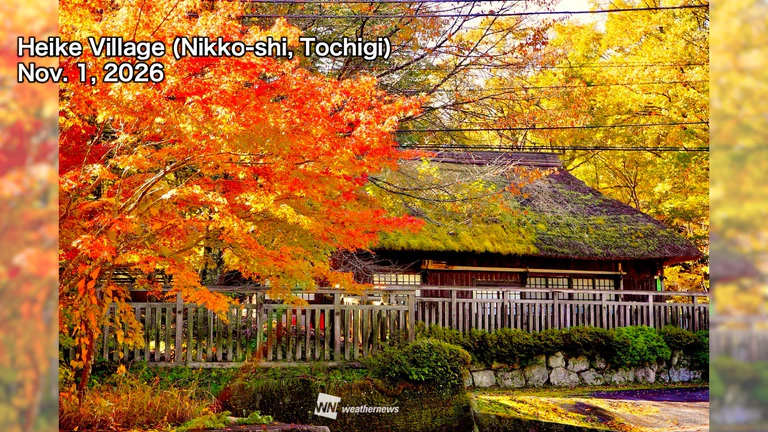
Peak foliage in the plains of northern Japan and along mountain areas in eastern and western Japan
In northern Japan, peak viewing areas have now shifted to the plains. Colorful foliage is forecast to remain through around mid-November, but strong winds are possible this weekend as a winter pressure pattern intensifies. Leaves may fall in places where foliage is already at its peak, so an earlier visit is recommended.
In eastern and western Japan, peak viewing areas are expanding along the mountains. In eastern Japan, they are gradually moving to lower elevations. Lake Ashi in Kanagawa Prefecture is expected to reach its peak in about a week. Days may still be warm when skies are clear, but mornings and evenings will be chilly, so bring a substantial jacket.
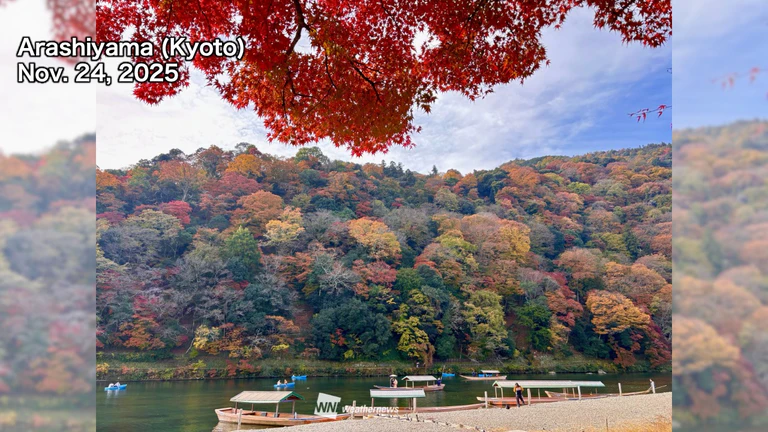
Foliage in the plains of eastern and western Japan is expected to peak in late November
In the plains of eastern and western Japan, including parks in Tokyo's 23 wards and areas in Kyoto City, foliage is expected to peak in late November. Temperatures are forecast to be high this autumn, and many places are expected to reach their peak slightly later than average.
Because the peak will start later, foliage is expected to remain enjoyable in the plains of many areas until around mid-December.
Heavy rain caused damage in places such as Chiba Prefecture this year because of the autumn rain front and typhoons. Access to some famous viewing spots has also been affected, so check the latest information before setting out to see the foliage.

- Thu, 05/11Max 18° Min 12°

- Fri, 06/11Max 25° Min 13°

- Sat, 07/11Max 18° Min 12°
- Sun, 08/11Max 15° Min 9°

- Mon, 09/11Max 15° Min 9°
- Tue, 10/11Max 15° Min 9°
- Wed, 11/11Max 15° Min 7°
Latest News

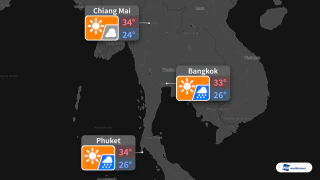 Tomorrow, November 5: Phuket forecast to see afternoon rain, intense midday sun and hot weather
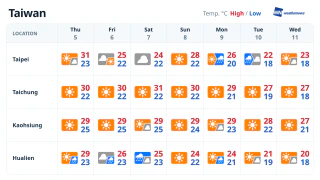 Weekly weather forecast: Northern Taiwan to turn rainy on the 9th-10th; rain in the east early in the week
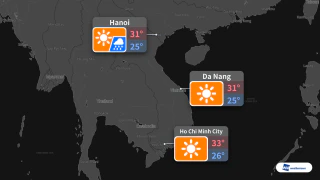 Hanoi forecast to see sunshine and afternoon rain tomorrow, Nov. 5
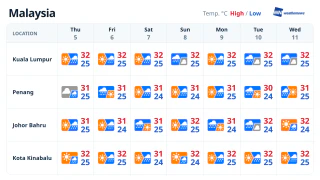 Weekly weather forecast: Higher rainfall totals in Peninsular Malaysia Nov. 8–10